
What Age Are Dogs Too Old for Boarding? An Honest Guide for Senior Dog Parents
10 min read

- 1.Why "What Age Are Dogs Too Old for Boarding" Is the Wrong Question
- 2.What Actually Determines If a Senior Dog Can Board
- 3.Why In-Home Boarding Tends to Fit Older Dogs Better
- 4.Questions to Ask Before Booking a Senior Boarding Stay
- 5.When a Senior Dog Probably Isn't Ready to Board
- 6.How Senior Boarding Looks in Orange County
- 7.Frequently Asked Questions
- 8.Ready to Find the Right Sitter for Your Senior Dog?
What age are dogs too old for boarding? It's one of the most common questions we hear from pet parents in Irvine, Costa Mesa, San Juan Capistrano, and Wildomar — usually paired with a photo of a graying muzzle and a worried text that starts with, "She's twelve now, and I just don't know if I can leave her..." The honest answer is that age, by itself, isn't the right metric. A nine-year-old Labrador with arthritis and anxiety may be a harder boarding candidate than a fourteen-year-old terrier mix who still trots around the block every morning.

This guide walks through how to actually decide whether your senior dog is ready for a boarding stay, what conditions matter more than age, the questions worth asking before you book, and how the in-home boarding model on our platform tends to suit older dogs more comfortably than a commercial facility. If you've already started searching for senior-focused options, our deeper piece on senior dog boarding and what older dogs actually need is a good companion read.
Why "What Age Are Dogs Too Old for Boarding" Is the Wrong Question
The phrasing of the question makes it sound like there's a number — like at age twelve, suddenly boarding becomes off-limits. There isn't. Veterinary behaviorists and senior pet specialists tend to look at a dog's biological and emotional readiness rather than the calendar.
Three twelve-year-old dogs can be in three completely different places:
- The healthy senior — clear eyes, steady appetite, no daily medication, walks normally, recovers from change quickly. Boarding is usually fine with the right setting.
- The medically managed senior — on one or two daily medications, manages a chronic condition like arthritis or thyroid issues, but is otherwise stable. Boarding can work, but the environment and the sitter matter a lot.
- The fragile senior — multiple medications, mobility decline, cognitive changes, narrow tolerance for stress, or recent recovery from illness. Boarding may still be possible, but it requires a very specific kind of sitter and a very calm environment — and sometimes, an in-home pet sitter who comes to your house is the better option.
Age is only meaningful in the context of what's happening inside that age. A dog isn't "too old" because of a number. A dog is harder to board when the realities behind that number — mobility, medication, anxiety, sleep — start to outpace what a given environment can support.
What Actually Determines If a Senior Dog Can Board
Here's what veterinarians and experienced sitters tend to evaluate. If you're trying to decide whether your dog is too old for boarding, work through this list honestly.
Mobility and Joint Health
Can your dog get up from rest without struggling? Climb the stairs at her own pace? Walk on hardwood or tile without slipping? Senior dogs with significant arthritis or hip issues do best in a single-story setting with orthopedic beds, non-slip rugs on slippery floors, short and optional walks, and minimal stairs.
Medication Routine
Daily meds aren't disqualifying. The question is whether the boarding setting can match the routine exactly. If your dog takes pain medication every twelve hours, she needs to be with someone who actually treats that schedule as a hard rule, not a "we'll get to it" task between other dogs. This is one of the areas where in-home boarding tends to shine — a sitter caring for a small number of dogs can build the day around medication windows — the kind of individualized scheduling that a larger, standardized setting typically isn't built around.
Sleep and Rest
Older dogs need more rest, in deeper sleep, often broken by overnight bathroom trips. They rely on deep, uninterrupted sleep to manage inflammation and cognitive function, so a quiet home with a consistent bedtime and minimal nighttime disruption tends to be especially gentle for a senior.
Anxiety and Cognitive Changes
If your senior is showing signs of canine cognitive decline — wandering at night, getting "stuck" in corners, becoming clingy or disoriented in new places — the wrong boarding environment can amplify all of it. The right one, with consistent routines and a single primary caregiver, can keep her calmer than you'd expect. The research on routine and stress recovery in dogs is clear: structured care actually reduces a dog's stress response, and that effect is even stronger in older dogs.
Vet Clearance
Before any senior boarding stay, talk to your vet. Not because your vet has to "approve" the boarding — but because a quick check-in can flag anything that's changed recently. Some pet parents schedule the stay around a wellness visit so the sitter has a fresh report to work from.
Why In-Home Boarding Tends to Fit Older Dogs Better
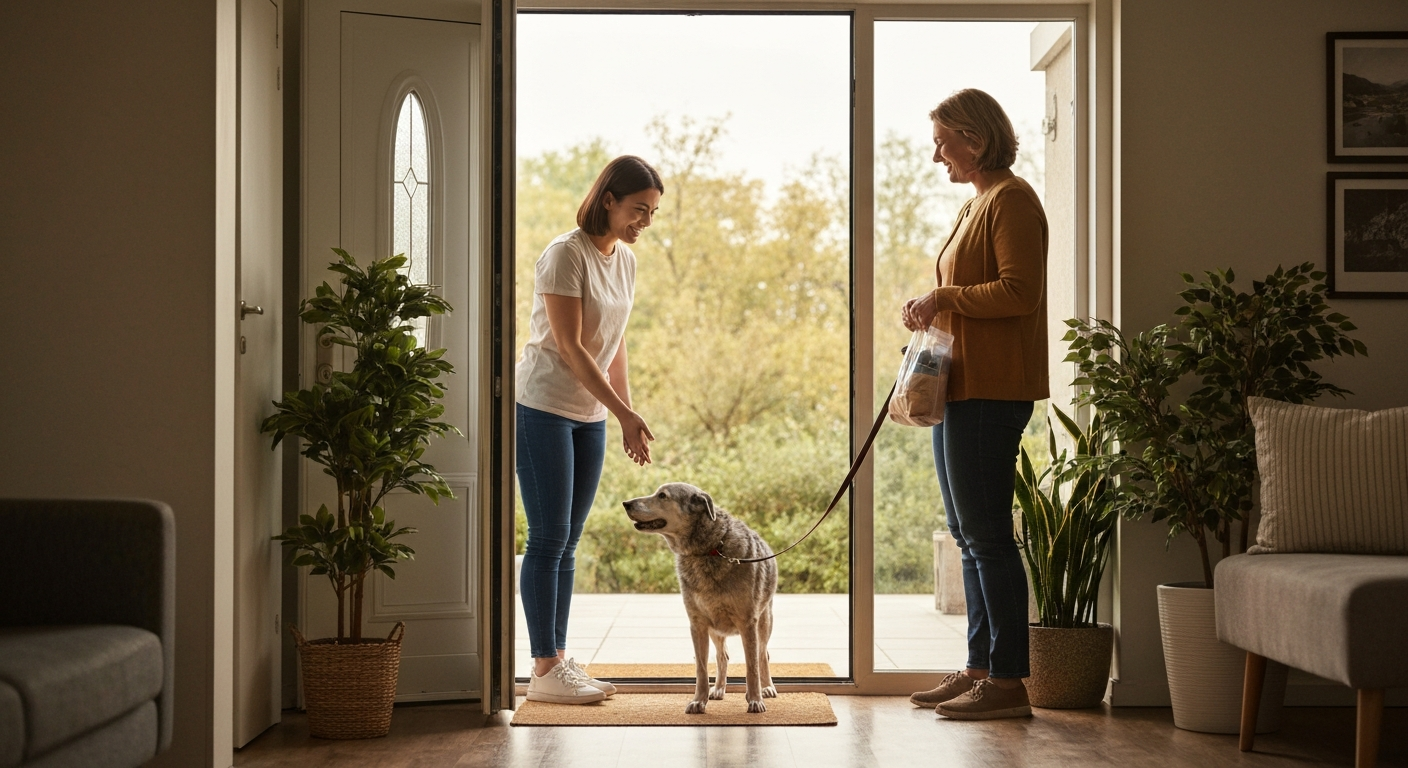
When pet parents ask us "what age are dogs too old for boarding," the underlying worry is almost never about age itself. It's about whether the environment can meet a senior dog where she is. The in-home model tends to align with what older dogs actually need:
- One household, one rhythm. Independent sitters typically host a small number of dogs at a time in their own homes, which means your senior dog can stay in a smaller-group, home setting rather than with a rotating staff. She gets one consistent caregiver in a quiet, predictable setting.
- Adaptable layout. Sitters can place orthopedic beds in their preferred resting spots, add non-slip rugs on slippery floors, and use baby gates to keep the bedtime space calm. This kind of customization can be harder to arrange in a larger, standardized setting.
- Routine that actually matches yours. Meal times, walks, medication, bedtime — independent sitters tend to follow the existing routine you describe, instead of fitting your dog into a facility schedule.
- More frequent updates. When you're away from a senior, photo and video updates aren't a nice-to-have — they're how you confirm she's eating, moving, and sleeping. Many independent sitters provide frequent updates, often multiple times a day for senior stays. We've written more about why transparent daily communication matters during boarding.
If you're weighing the two formats, our deeper kennel vs. in-home boarding comparison is the best place to see the difference laid out side by side. For many older dogs, a calmer in-home setting can be what tips the answer to "no, she's not too old — she just needs the right setting."
Questions to Ask Before Booking a Senior Boarding Stay
Once you've decided your senior is a candidate for boarding, ask the sitter directly:
- "Have you hosted senior dogs before? Can you tell me about one?" You want a real answer with specifics — medication, mobility adaptations, slow walks — not a generic "I love all dogs."
- "What does a typical day look like for an older dog in your home?" Listen for rest periods, gentle activity, medication windows, and quiet bedtime.
- "How do you handle nighttime bathroom needs?" Many seniors need a midnight trip outside. A sitter who plans for this is showing real awareness.
- "How often will you send photo and video updates?" For senior stays, the standard should be multiple times per day, especially in the first 24 hours.
- "What's your plan if something feels off?" A thoughtful sitter has a vet contact and a clear escalation plan — and asks for yours.
This list overlaps with our broader pre-boarding checklist for what to tell your sitter, which is worth reviewing the day before drop-off.
When a Senior Dog Probably Isn't Ready to Board
There are situations where boarding — even in-home boarding — may not be the right call this time. Be honest about:
- Recent surgery or illness. Wait until your dog is stable and your vet is comfortable.
- End-stage cognitive decline. When a dog can no longer recognize routine or family members, change can be deeply destabilizing. In-home pet sitting (where the sitter comes to your house) is often gentler.
- Severe separation distress that hasn't been addressed. A short trial day or overnight is more humane than a week-long stay.
- Medical instability. Frequent seizures, unmanaged pain, or a brand-new diagnosis usually mean waiting until things stabilize.
None of these are tied to age. They're tied to what's happening with your specific dog right now.
How Senior Boarding Looks in Orange County
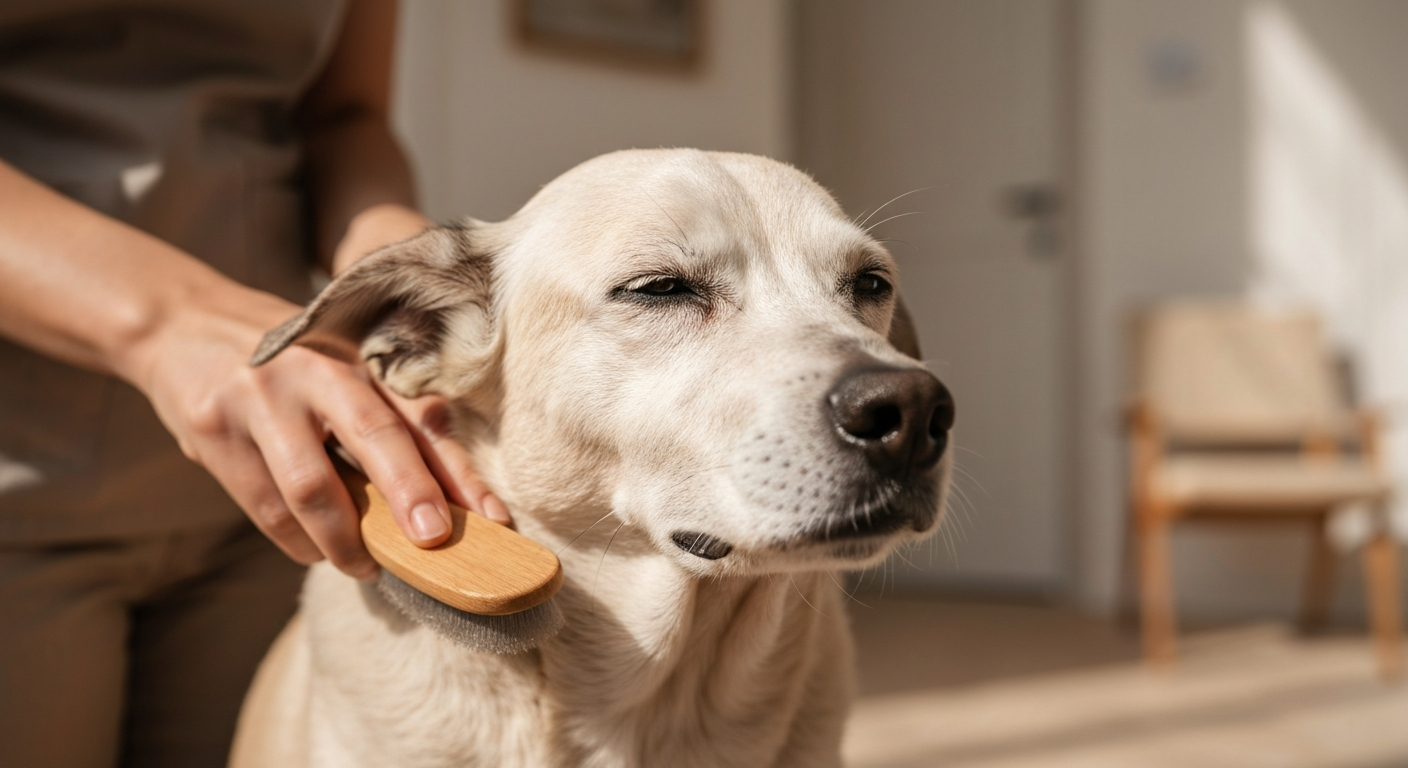
Across our sitter cities — Irvine, Costa Mesa, San Juan Capistrano, and Wildomar — we see senior dogs successfully board well into their teens. A fifteen-year-old corgi with daily arthritis meds and a strict feeding window has stayed comfortably with a sitter who keeps her groups small, sleeps near her bed, and sends a video every morning. A thirteen-year-old standard poodle with early cognitive changes has done multi-night stays in a quiet home where the routine matched her own to the half-hour.
What makes these stays work isn't the dog's age. It's the match. A senior-friendly home, a sitter who's genuinely comfortable with older dogs, and a routine that mirrors what your dog already knows.
Frequently Asked Questions
Q: What age are dogs too old for boarding, really? A: There isn't a hard cutoff. Healthy seniors well into their teens can board comfortably with the right sitter. The deciding factors are mobility, medication routine, anxiety level, sleep needs, and recent health stability — not the number itself.
Q: Is in-home boarding safer than a kennel for an older dog? A: For most senior dogs, yes — not because kennels are unsafe, but because the in-home format is quieter, more adaptable, and easier to match to an individual dog's routine. Less stimulation, more rest, and a consistent caregiver tend to suit older dogs better.
Q: Should I get vet clearance before boarding my senior dog? A: It's a good idea, especially if anything has changed recently. A short wellness check gives you a current baseline, and the sitter can work from a fresh medication list and any specific notes from your vet.
Q: What if my dog has dementia or cognitive decline? A: For mild cognitive changes, a quiet in-home boarding stay with a single caregiver and a routine that closely mirrors home can work well. For more advanced cognitive decline, in-home pet sitting (sitter comes to your house) is often the gentlest option.
Q: How do I make boarding less stressful for an older dog? A: Send familiar items (bed, blanket, favorite toy), keep meal and medication timing identical to home, brief the sitter on her quirks, and ask for frequent updates in the first 24 hours. Picking a sitter who's already comfortable with seniors makes the rest of the stay much smoother.
Ready to Find the Right Sitter for Your Senior Dog?
If your dog is older but otherwise healthy, "too old" probably isn't the right framing. The right framing is: who can match her routine, her pace, and her medical needs in a calm, home-like setting? That's exactly the kind of match the in-home format on Ruh-Roh Retreat is built for. Many platforms make it easy to find a sitter; Ruh-Roh Retreat makes it easier to find the right one — a curated community of experienced sitters you can compare by care style, home environment, and comfort with seniors, so you can choose the experience that fits your individual dog. Browse senior-friendly sitters in your Orange County city and message them directly — ask the questions above, share your dog's full picture, and pick the sitter whose answers feel right. Your senior deserves a stay that's restorative, not just survivable.
You Might Also Like
 13 min
Apr 18, 2026
Senior Dog Boarding: What Older Dogs Actually Need When You're Away
Senior dog boarding isn't just pet care for older dogs — it's a completely different set of needs. Learn what to look for, what to ask, and how to find a sitter who truly understands aging dogs.
Read More → 9 min
9 minJul 11, 2026
How Much Is a Dog Hotel Per Night? Orange County Pricing Explained (2026)
How much is a dog hotel per night? Here's what Orange County pet parents actually pay in 2026 — typical nightly rates, what a per-night price includes, and how to compare quotes before you book.
Read More → 8 min
8 minJul 4, 2026
How to Book a Dog Sitter Online in Orange County: A Step-by-Step Guide
Learn how to book a dog sitter online in Orange County — from comparing sitters to a meet-and-greet to confirming dates — plus the trust signals worth checking before you commit.
Read More →