
5 Signs Your Dog Has Separation Anxiety (And How to Help)
8 min read
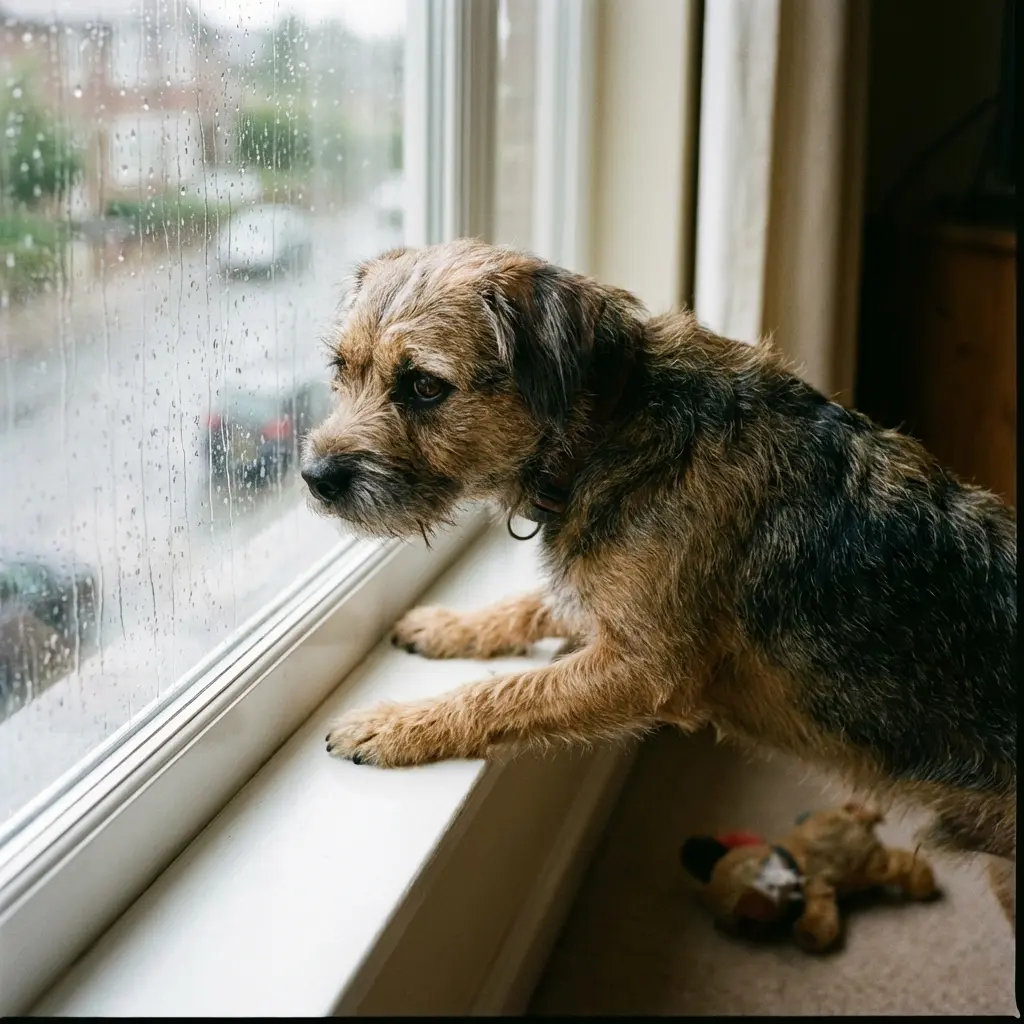
Leaving your dog behind when you travel is never easy, but for dogs with separation anxiety, it can be downright traumatic. Unlike simple sadness, separation anxiety is a genuine panic response that can manifest in destructive or distressing ways — and it affects far more dogs than most people realize.
Studies estimate that somewhere between 14 and 20 percent of dogs seen by veterinarians show symptoms of separation anxiety. The condition exists on a spectrum, from mild discomfort to full panic attacks that can result in self-injury. And critically, many owners don't recognize the signs until the behavior has escalated to a level they can no longer ignore.
On Ruh-Roh Retreat, you can find sitters who specialize in caring for sensitive pups and who understand the difference between a dog who is merely adjusting and a dog who is genuinely in distress. But first, you need to know what to look for. Here are the 5 most common signs that your dog struggles when you are gone — and what you can actually do about it.
1. Excessive Pacing and Panting
If your dog starts pacing in circles or panting heavily as soon as you grab your keys, they are already building up anxiety before you have even left the house. This "pre-departure anxiety" is one of the clearest early warning signs and is often triggered by your departure cues — specific sounds, movements, or rituals that your dog has learned to associate with being left.
Dogs are extraordinarily good at reading behavioral patterns. Many dogs begin showing signs of distress 20 to 30 minutes before their owner actually departs, simply because they recognize the sequence: keys picked up, shoes put on, bag grabbed, door opening. Each cue escalates the anxiety response.
Panting and pacing in this context are not signs that your dog is hot or bored. They are physiological stress responses — the canine equivalent of a racing heart and shallow breathing before a panic attack. If this sounds familiar, your dog is likely experiencing genuine anxiety, not just excitement.
2. Destructive Behavior
Chewed doorframes, scratched floors, destroyed pillows, gutted furniture cushions — these are not signs of a "bad dog." They are signs of a frantic dog trying to cope with overwhelming distress.
Destructive behavior during separation serves two psychological functions for an anxious dog. First, chewing releases endorphins, providing brief relief from the anxiety. Second, dogs often target areas near exits (doorframes, window sills, baseboards) in a literal attempt to escape and find their owner. The destruction is not spite or misbehavior — it is desperation.
Understanding this reframes the problem significantly. Punishment after the fact does nothing to address the underlying anxiety and often makes it worse by adding another layer of uncertainty to an already stressed dog's environment. The solution is addressing the root cause of the panic, not the symptom.
3. Vocalization: Barking and Howling
Persistent barking, howling, or whining that begins as soon as you leave — or even before you leave — is a form of social communication. Dogs are pack animals, and vocalization is one of their primary tools for calling separated pack members back together.
The key distinction here is between a dog who barks for a few minutes after departure and then settles, versus one who vocalizes persistently for the duration of your absence. Brief "protest barking" followed by settling is usually not anxiety. Sustained, distress-driven vocalization is.
If your neighbors have commented on your dog's barking while you are at work, or if you have reviewed a pet camera and found your dog howling for extended periods, that is meaningful information. It's worth taking seriously, both for your dog's welfare and because chronic vocalization is genuinely exhausting for the dog.
4. Accidents Indoors
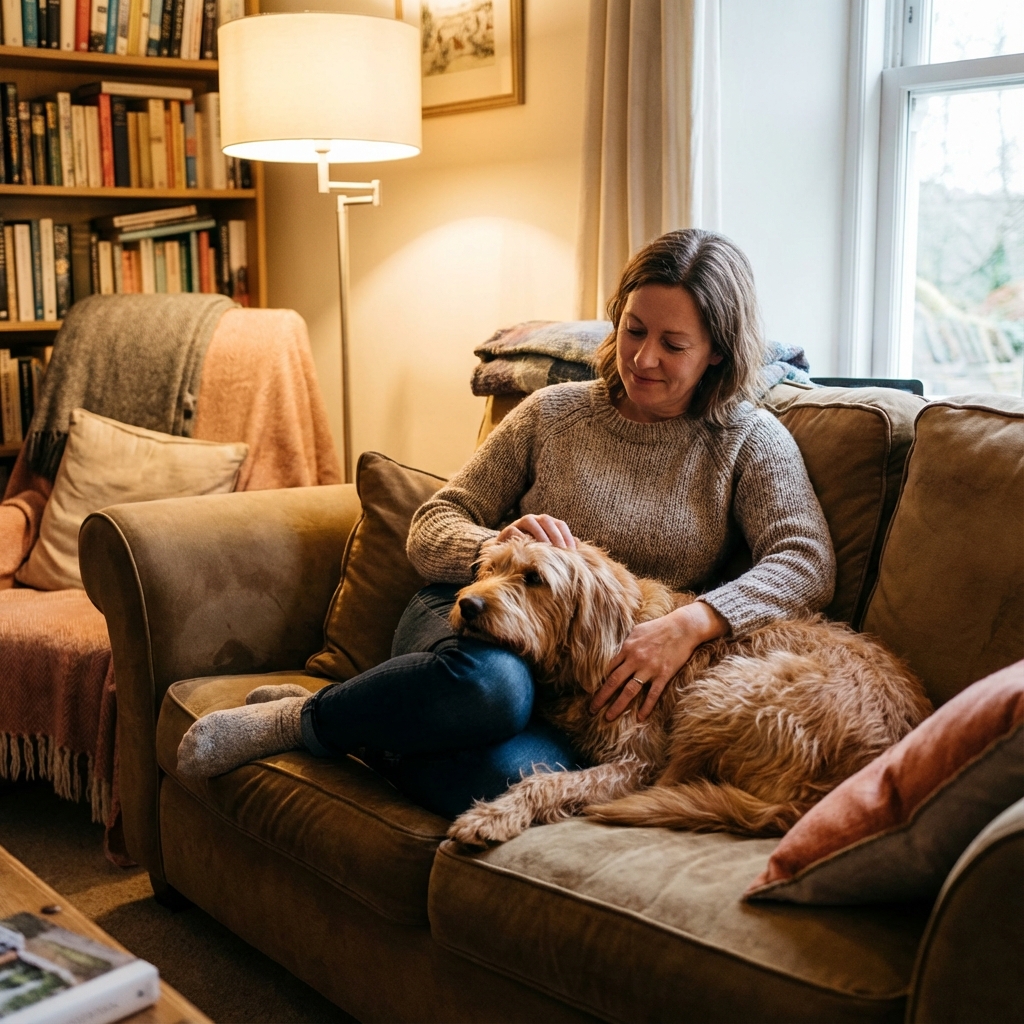
A house-trained dog who suddenly urinates or defecates inside when left alone — but not when someone is home — is often experiencing a loss of bowel and bladder control due to extreme anxiety. This is not a training failure or a regression in housebreaking.
During a full panic response, the autonomic nervous system takes over. The same fight-or-flight response that might cause a human to vomit before public speaking can cause a dog to lose control of elimination. If your dog has never had accidents when people are present but consistently soils indoors when alone, separation anxiety is a very likely explanation.
This is important to communicate to any sitter caring for your dog. A sitter who understands anxiety-related accidents will respond very differently (calmly, without punitive body language or tone) than one who interprets it as behavioral noncompliance.
5. Shadowing and Hyper-Attachment
Does your dog follow you from room to room, unable to tolerate even the minor separation of you going to the bathroom? Do they position themselves so they always have physical contact with you, or become visibly distressed when you leave even briefly within the home?
This "velcro dog" behavior — where the dog seems almost unable to regulate their own emotional state independently of their owner — is a strong predictor of separation anxiety when actual separation occurs. The dog has essentially outsourced their sense of safety to their human, and when that human disappears, the support structure collapses entirely.
Shadowing itself is not harmful, but it is worth understanding as a precursor to what happens when you actually leave for a trip.
How In-Home Boarding Can Help Many Anxious Dogs
Every anxious dog is different — some settle best with near-constant companionship, others need a very quiet home, a specific routine, or a sitter experienced with medication or reactivity. Ruh-Roh Retreat lets pet parents compare each sitter's Home Environment, Care Style, and Key Skills to find the setup that actually fits their dog.
For some dogs with separation anxiety, a busier facility environment — more unfamiliar noise, other stressed dogs nearby, and less one-on-one human contact — can be harder to settle into. This varies a great deal by facility and by dog, which is why matching the environment to your individual dog's needs matters more than the label on the door.
Boutique boarding takes a fundamentally different approach.
Constant companionship: Many sitters who host dogs in their own homes are present for much of the day. Many anxious dogs naturally settle better when they have consistent human presence — the physical fact of someone being in the room, moving around, doing ordinary things, is often enough to prevent the spiral into full panic.
Home environment: The sights, sounds, and ambient smells of a real residential home — television in the background, cooking smells, the creak of floors, the rhythm of a normal household — closely resemble what many anxious dogs are already used to.
Structured routine: Sitters who maintain your dog's home schedule provide the predictability that anxious dogs depend on. As explored in our post on the importance of routine and structured care, predictability is one of the most effective tools for lowering canine stress hormones during boarding.
Enrichment and engagement: Sitters who offer enrichment-based activity — puzzle feeders, gentle training games, Sniffari decompression walks — give anxious dogs something positive to focus on. Mental engagement occupies the seeking drive that anxiety tends to hijack.
Beyond Boarding: Working on Separation Anxiety Long-Term
If your dog shows several of the signs above, boarding solution aside, it is worth addressing the underlying anxiety with a professional.
A certified veterinary behaviorist (DACVB) or certified applied animal behaviorist (CAAB) can assess the severity and recommend a treatment plan. For moderate to severe cases, this often includes a structured desensitization and counter-conditioning protocol — gradually retraining the dog to associate departure cues with positive outcomes rather than panic.
In some cases, short-term anti-anxiety medication prescribed by a vet can provide enough relief during the retraining process that the behavioral work can actually take hold. Medication alone rarely resolves separation anxiety; behavioral modification paired with medication tends to produce the best outcomes.
In the meantime, for boarding specifically, the key is finding a sitter who genuinely understands anxiety — who will not push the dog to "get over it," who knows how to read stress signals, and who creates an environment that minimizes the gap between the dog's home life and their temporary stay.
Anxiety does not have to ruin your vacation — or your dog's. With the right care environment and a sitter who understands what sensitive dogs actually need, even anxious pups can have a genuinely good stay.
Looking for a sitter experienced with anxious dogs? Many platforms make it easy to find a sitter; Ruh-Roh Retreat makes it easier to find the right one — compare a curated community of experienced sitters and choose the experience that fits your individual dog. Browse sitters on Ruh-Roh Retreat and find compassionate, patient care for your sensitive pup.
You Might Also Like
 9 min
9 minJul 11, 2026
How Much Is a Dog Hotel Per Night? Orange County Pricing Explained (2026)
How much is a dog hotel per night? Here's what Orange County pet parents actually pay in 2026 — typical nightly rates, what a per-night price includes, and how to compare quotes before you book.
Read More → 8 min
8 minJul 4, 2026
How to Book a Dog Sitter Online in Orange County: A Step-by-Step Guide
Learn how to book a dog sitter online in Orange County — from comparing sitters to a meet-and-greet to confirming dates — plus the trust signals worth checking before you commit.
Read More → 8 min
8 minJun 30, 2026
July 4th in Orange County: Where to Board Your Dog During Fireworks Season
July 4th is the single biggest day of the year for lost pets nationwide. Here's how Orange County pet parents in Irvine, Costa Mesa, San Juan Capistrano, and Wildomar can plan dog boarding around fireworks season — plus how to keep an anxious dog safe at home.
Read More →